Allegent Group, LLP · CPAs and Advisors

Financials other people can rely on. From a peer-reviewed CPA firm.

When a lender, an investor, a board or a probate court asks for your numbers, the real question is how much assurance they need. We prepare the compilation, review or audit they are asking for, and keep your books and taxes current in between.

  • Three partner CPAs
  • Peer review: pass (2025)
  • Audits · reviews · compilations
  • Woodland Hills + Valencia

Not sure what they are asking for? Find my assurance level Get the year-end checklist

  • Julie Widener, CPA, Partner at Allegent Group Julie Widener, CPAPartner
  • Brad C Polak, CPA, Partner at Allegent Group Brad C Polak, CPAPartner
  • Susana Barajas, CPA, Partner at Allegent Group Susana Barajas, CPAPartner
Peer review rating Pass CalCPA System Review, accepted May 31, 2025

Who we serve

The Assurance Ladder

Who is asking for your financials? That decides the report.

Compilation, review or audit: three levels of assurance, and each costs more work than the one below it. Pick who is asking. The ladder shows how high you need to climb, and what you get at that rung.

Who is asking?

Banks often require a compilation from an independent CPA as part of their lending covenants. Larger or riskier financing can call for an audit.

Highest assurance

Audit

What it saysOur report states whether your financial statements are fairly stated and free of material misstatement.

  • Review of your internal controls
  • Testing of selected transactions in each operating cycle
  • Written confirmations with your banks, customers, vendors and attorneys
  • Observation of inventory counts, with test counts
Scope my audit

Limited assurance

Review

What it says“We are not aware of any material modifications” needed for the statements to conform with GAAP. All required footnotes and disclosures included.

  • Analytical procedures applied to your statements
  • Inquiries of your management team
  • More procedures only if something looks inconsistent
  • No internal-control study, third-party confirmations or asset inspection
Scope my review

No assurance expressed

Compilation

What it saysStatements presented as the representation of management, prepared by an independent CPA, with no opinion or assurance.

  • Statements prepared from your records
  • Our knowledge of accounting principles and of your business
  • No inquiries or analytical procedures required
  • The level banks most often ask for in covenants
Scope my compilation

The ground floor

Monthly books

What it saysNo outside report. Accurate books every month, so a compilation, review or audit starts from clean records.

  • Bank account reconciled
  • Income statement and balance sheet generated
  • General ledger cleaned up
  • Unlimited consultations
Get my books current

Off the ladder: for the court

Fiduciary accounting

What it saysAccounting schedules prepared to the requirements of the California Probate Code, for trustees, executors and conservators.

  • Establishing trust assets and values
  • History of transactions, and capital gains and losses
  • Allocating transactions to principal or income
  • Trust expenses, plus tax planning for the trust or estate
Start my trust accounting

Your loan agreement, investor agreement or grant terms set the level, not us. Send us the language and we will confirm the right report on your free consultation, or call (818) 703-0807.

Proof, not adjectives

Another CPA firm checked our work. We passed.

Anyone can say “quality.” A peer review is where an outside firm examines how we run our audit and accounting practice, and the state CPA society accepts or rejects the result.

California Peer Review Committee
CalCPA Peer Review Program

System Review accepted May 31, 2025

Firm
Allegent Group, LLP, CPAs and Advisors
Review type
System Review (for firms that perform audits)
Rating
Pass
Next review due
January 31, 2028
Read the acceptance letter (PDF)

The partners, by the record

  • 25+years practicing Brad C Polak, CPAWith Allegent Group and its predecessor firms for more than 16 years; public and private accounting.
  • 25+years when she joined Julie Widener, CPAJoined in 2019. Entertainment, real estate, medical, professional services and investors.
  • 11+years when she joined Susana Barajas, CPAJoined in 2016. Audits, reviews and compilations; partnerships, C and S corps, trusts, exempt organizations.

Licensed in California. Susana is an active member of the California Society of CPAs. Firm administrator Kate Crosby brings 15+ years of public-accounting practice administration.

How the monthly close works

  1. 01

    Reconcile

    Your bank account reconciled, so lost checks, lost deposits and bank errors surface the same month.

  2. 02

    Report

    An income statement and a balance sheet generated from the reconciled books.

  3. 03

    Clean up

    Your general ledger cleaned up, so year-end and any outside report start from clean records.

  4. 04

    Consult

    Unlimited consultations. Add payroll, tax planning or preparation as you need them.

Sample · illustrative figures, not a client

Monthly close packetOctober 2026 · Example Co. Closed Nov 12
  • Bank reconciliation3 of 3 accounts
  • Income statementattached
  • Balance sheetattached
  • Ledger clean-up4 entries reclassed
  • Questions for you2 items
Revenue$184,200
Net income$21,650
Cash, month-end$96,410
What lands on your desk after each monthly close. Figures are invented for illustration.

Three specialties, spoken to directly

Some accounting has to stand up to a judge, the IRS or a buyer.

An older man signing a legal document at a desk For trustees, executors & conservators

You agreed to be trustee. Now the court wants an accounting.

Being named trustee, executor or conservator usually means a stack of statements and a duty to account for every dollar. We keep the record complete and prepare the schedules to the requirements of the California Probate Code.

  • Assets and valuesTrust assets established and valued from day one.
  • Principal or incomeEach transaction allocated to the right side of the trust.
  • Gains and lossesCapital gains and losses recorded as they happen, not reconstructed.
  • Trust and estate taxTax planning to reduce the tax burden on the trust or estate.
Start my trust accounting
A small white country church with a steeple on a green hillside For nonprofits & churches

Your mission depends on the 990 being right.

The IRS uses very specific revenue and expense classifications to decide whether an organization keeps its tax-exempt status. We build your books around those classifications and handle the IRS reporting.

  • Forms 990 & 990-TPrepared and filed, with the functional expense statement done right.
  • 501(c)(3) statusApplications for new organizations, start-up documents included.
  • Board-ready statementsReviews and compilations, plus board training on reading them.
  • Ministers’ housingPastoral housing allowance and benefit documentation for churches.
Protect our exempt status
Two business owners sitting together outside the doorway of their shop For family & closely-held businesses

What happens to the business when you step back?

Retirement for a family business owner is not just deciding to stop coming in. Who runs it, who owns it, what it is worth, and whether you have enough to retire all need answers before the handoff, not during it.

  • Family or third partyThe trade-offs of passing it down versus selling it.
  • Defensible valuationFor buyouts, gifting, financing, disputes or estate planning.
  • Part-time CFOBudgets, cash flow and bank negotiations without a full-time hire.
  • Statements buyers trustReviewed or audited statements when a buyer or lender asks.
Plan my handoff

The partners

Small enough to be agile. Big enough to do quality work.

That is how Julie describes Allegent: three partner CPAs and a firm administrator, in a firm that passed its latest peer review.

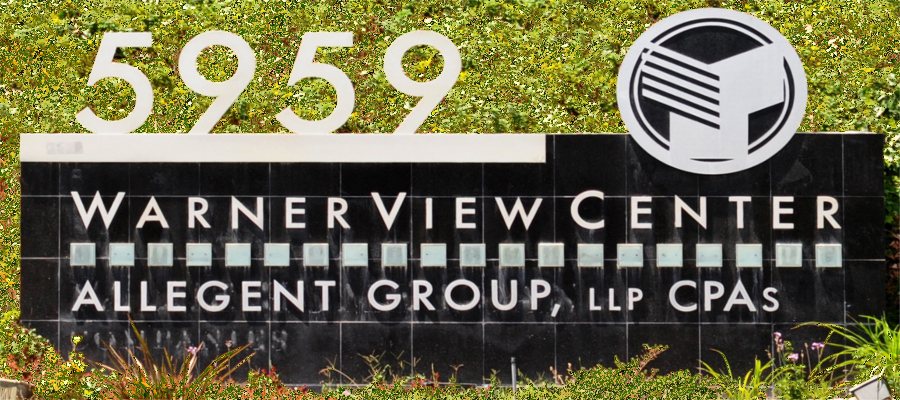
Monument sign at 5959 Warner View Center listing Allegent Group, LLP CPAs
Our Woodland Hills office at Warner View Center
  • Brad C Polak, CPA, Partner

    Brad C Polak, CPA

    Partner · With Allegent and its predecessor firms 16+ years

    More than 25 years in public and private accounting. Brad brings individual and business clients a treasure chest of ideas, and believes the firm’s success is built on its clients’ success. Lives in the Valencia area.

    • Individuals
    • Business clients
    Full bio
  • Julie Widener, CPA, Partner

    Julie Widener, CPA

    Partner · Joined 2019 with 25+ years

    Julie keeps up with the endless tax-law changes because her clients want prompt answers, and she stays involved year-round, not just in tax season.

    • Entertainment
    • Real estate
    • Medical
    • Professional services
    • Investors
    Full bio
  • Susana Barajas, CPA, Partner

    Susana Barajas, CPA

    Partner · Joined 2016 with 11+ years

    Tax for partnerships, C and S corporations, trusts, exempt organizations and individuals, plus audits, reviews and compilations. Specialties: closely-held entities and high-net-worth individuals with real estate.

    • Assurance
    • Trusts
    • Closely-held entities
    Full bio
  • Kate Crosby, Firm Administrator

    Kate Crosby

    Firm Administrator · Joined 2018 with 15+ years

    Kate runs the day-to-day operation of the firm: tax procedures, scheduling, and keeping the office running smoothly.

    • Scheduling
    • Client service
    Full bio

Full service

Everything else a CPA firm should handle, under one roof.

  • Business services

    Run the business at peak performance and stay in compliance.

    • Small business accounting
    • QuickBooks setup, training & QuickAnswers
    • Part-time CFO
    • Cash-flow management
    • Business valuation
    • Strategic & succession planning
    • New business formation
    • Internal controls
  • Assurance

    Three levels of assurance for lenders, investors and boards.

    • Audits
    • Reviews
    • Compilations
    • Nonprofit financial statements
  • Tax services

    Planning, compliance and preparation, all year.

    • Tax planning
    • Tax preparation
    • Partnerships, C & S corps, trusts
    • Exempt organizations (990, 990-T)
  • IRS problems

    Efficient, affordable and discreet resolution.

    • IRS audit representation
    • Non-filed returns & back taxes
    • Payroll tax problems
    • Liens, levies, garnishments, seizures
    • Offers in compromise & payment plans
    • Innocent spouse relief
  • Fiduciary accounting

    For trustees, executors and conservators.

    • California Probate Code schedules
    • Principal and income allocation
    • Trust and estate tax planning
  • Individuals & families

    Protect personal assets and plan ahead.

    • Personal financial planning
    • Estate planning
    • Elder care: bill pay, budgets, records

Year-end planning

Moves to make before Dec 31.

After New Year’s, your return mostly reports what already happened. Before it, you can still change the outcome. Six moves worth a look for owners, families, trustees and nonprofits.

A calculator and pen resting on a printed financial report with charts
  1. 01

    Decide which side of Dec 31 income and expenses land

    Shifting income or expenses from one year to the next can put them where they are taxed at a lower rate. Run both years before you move anything.

    Business owners
  2. 02

    Fund retirement plan contributions

    Pension and retirement plan contributions can defer tax. Some plan types have setup or election deadlines near year-end.

    Owners & executives
  3. 03

    Make this year’s gifts this year

    Gifts to family use each calendar year’s gift-tax exclusion. Once Dec 31 passes, this year’s exclusion is gone.

    Families
  4. 04

    Trustees: review distributions to beneficiaries

    Distributions can carry taxable income out of the trust and onto beneficiaries’ returns. Look at the numbers before year-end.

    Trustees & executors
  5. 05

    Nonprofits: clean up classifications before the 990

    Expenses split across program services, fundraising and operations are easier to fix in December than in May.

    Nonprofits & churches
  6. 06

    Pull your loan covenants

    Check when your bank expects its compilation, review or audit, so your year-end close is built to support it.

    Business owners

Free download · PDF · no sign-up

The 2026 year-end moves checklist

All six moves, plus the documents to gather before your planning meeting, on two printable pages.

General information, not tax advice for your situation. Tax rules depend on your facts and change often; talk with a CPA before acting on any of these. Prefer the phone? Call (818) 703-0807.

Questions

Straight answers before you book.

Not sure which report you need, or whether we handle it? A short call answers it faster than another hour of searching.

What is the difference between a compilation, a review and an audit?

A compilation presents your financial statements as management’s representation and gives no assurance. A review adds analytical procedures and inquiries and gives limited assurance (“we are not aware of any material modifications”). An audit gives the highest level of assurance: we test transactions, review internal controls and confirm balances with banks, customers, vendors and attorneys.

Which report does my bank need?

Your loan agreement or the lender will say. Banks often require a compilation from an independent CPA as part of their lending covenants, and some require an audit depending on the size of the financing and their view of the risk. Send us the covenant language and we will tell you which report it calls for.

Is Allegent Group peer reviewed?

Yes. On May 31, 2025 the California Peer Review Committee accepted the report on the firm’s most recent System Review, with a peer review rating of pass. The firm’s next review is due by January 31, 2028. The acceptance letter is published on our website.

Can you prepare a trust or estate accounting for court?

Yes. We help trustees, executors and conservators keep a complete accounting of the assets entrusted to them and prepare accounting schedules that meet the requirements of the California Probate Code, along with tax planning for the trust or estate.

Do you work with nonprofits and churches?

Yes. We prepare Forms 990 and 990-T, help new organizations apply for 501(c)(3) status, review and compile financial statements, handle payroll, and prepare the pastoral housing allowance documentation churches need for ministers.

Where are your offices?

Our main office is at 5959 Topanga Canyon Blvd., Suite 370, Woodland Hills ((818) 703-0807). Our Valencia office is at 27240 Turnberry Lane, Suite 200, Valencia ((661) 775-2929).

How do I get started?

Request a free consultation online and tell us the best time to call, or phone (818) 703-0807. We will ask what you need, who is asking for it, and when it is due.

Get started

Tell us who is asking. We will tell you what it takes.

A lender’s covenant, a trust accounting, a 990, a year-end plan: request a free consultation, tell us the best time to call, and a member of the team will call you back. Woodland Hills and Valencia.

Or find your assurance level first